
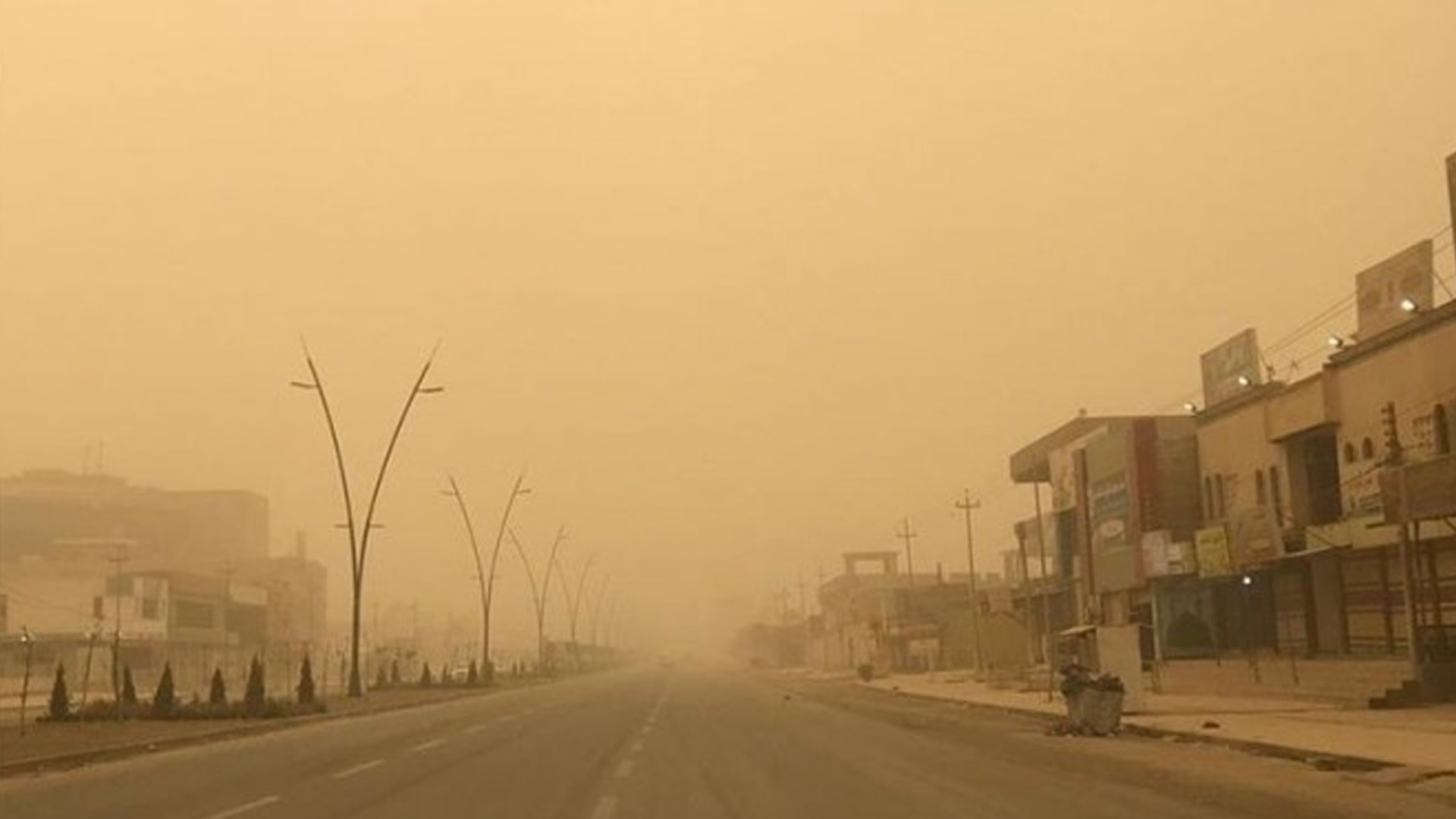







Sand and dust storms are escalating in intensity and frequency, threatening the health and livelihoods of hundreds of millions across the globe, according to a new report released Thursday by the World Meteorological Organization (WMO).
The Airborne Dust Bulletin revealed that about 330 million people in more than 150 countries are affected by this airborne hazard each year. While much of the dust movement is natural, the UN agency warns that poor land and water management, drought, and environmental degradation are significantly contributing to its intensification.
“Sand and dust storms do not just mean dirty windows and hazy skies. They harm the health and quality of life of millions of people and cost many millions of dollars through disruption to air and ground transport, on agriculture, and solar energy production,” WMO Secretary-General Celeste Saulo said in a news release.
In 2024, the global annual dust concentration fell slightly from 2023 levels, but hotspots like Chad – home to the Bodele Depression – saw levels between 800 and 1100 µg/m³ (micrograms or one-millionth of a gram per cubic meter air), far exceeding global norms. In the southern hemisphere, central Australia, and South Africa’s west coast saw the highest concentrations.
Dust storms in 2024 struck regions from the Caribbean Sea, where African dust traveled transatlantically, to northern China, which experienced both spring and rare summer storms driven by a warming climate, according to the bulletin. A winter storm in West Asia paralyzed activity across Iraq, Kuwait, and the Arabian Peninsula.
Every year, an estimated 2 billion tons of dust – comparable to 307 Great Pyramids of Giza – is lifted into the atmosphere, the WMO said. More than 80 percent of this comes from North Africa and the Middle East, and they can travel thousands of kilometers, even across oceans.
The agency also warned that the health burden is rising sharply. A new indicator from the WMO and World Health Organization (WHO) found that 3.8 billion people – nearly half the global population – were exposed to dust levels exceeding WHO safety thresholds between 2018 and 2022. That’s up from 2.9 billion people (44.5 percent) in the 2003–2007 period.
On the economic aspect, the bulletin found that the cost is staggering. In the US alone, dust and wind erosion caused USD154 billion in damage in 2017, a quadrupling of the amount since 1995, according to a study in the journal Nature.
“This Bulletin shows how health risks and economic costs are rising – and how investments in dust early warnings and mitigation and control would reap large returns,” Saulo said. (PNA)